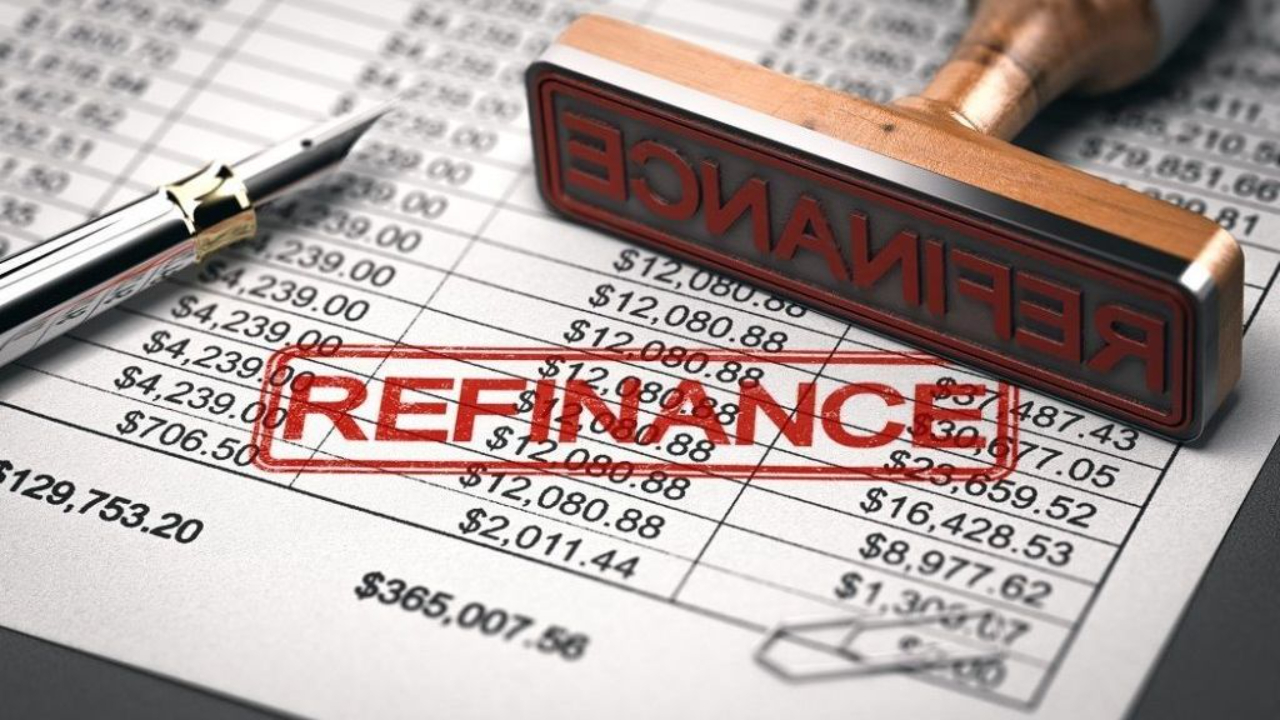
You’ve Heard of Refinancing...
You’ve probably nodded along while people talked about ‘getting a lower rate’.
But there’s a good chance no one ever explained how it actually works.
Today, we change that.
Refinancing is simple on paper:
1. You took out a loan when rates were at X%.
2. Interest Rates are now lower.
3. So, you take out a new loan at the lower rate, the new loan pays off the old one
4. Your monthly payment drops
Easy peasy.
But.
It’s not enough for the numbers to work. The decision has to work for your life.
Sure, refinancing lowers your monthly payment, but only after you pay thousands of dollars in fees. And if you don’t stay in the home long enough, you never recoup those fees.
How do you decide? My complete thoughts below…
First, Run the Math.
All lenders will say refinancing saves you money. And it almost always does. You don’t need to be worried about that.
What we need to be worried about are WHEN those savings kick in.
The key metric for this is your Months to Break Even.
Everything should tie back to this.
Refinancing has a Cost from the Lender for their services (the logistics of paying off your old loan, issuing the new one, etc.).
But paying the fee allows you to Lower Your Monthly Payment.
The trick is understanding how long it will take for that lower monthly payment to add up to the cost from the lender.
To do that, take the refinancing costs and divide it by your monthly savings. That’s how many months it will take to break-even.
Refinancing break-evens often take a while.
If it takes 10 years to breakeven and you plan to sell your house in only 5 years - you’ll never recoup the Refinancing Fees and refinancing is NOT worth it.
So step 1, ask yourself: Will I live here until the break-even point?
If the answer is yes, keep the process rolling.
If you decide to refinance, there are a few more things to think through...
First the structure of the refinancing.
Consider the length of the new loan and how you want to pay the lender fees.
If you’re refinancing you may already be 5 years into a 30-year mortgage.
Do you want to reset your debt clock back to 30 years?
You can, but you can also do a shorter-term (15, 20, 25-year, etc.)
Also consider the lender fees. Those fees can easily be 2-6% of the total loan cost.
Do you have tens of thousands of dollars in cash today to pay those fees?
If not, lenders will let you build those fees into the new loan amount. So if you refinance a $200,000 loan, the fee of $8,000 turns it into a $208,000 loan.
If you do this, re-run the numbers to make sure the Months to Break Even still work.
The next thing to consider is what you want to do with your monthly savings.
In general, any time you get a raise or bonus (or fall into more cash through a refinance), take a look and make sure your bases are covered:
- Am I saving 10% for retirement?
- Do I have an emergency fund?
- Am I investing 5-15% outside of retirement?
- Do I have credit card debt?
Chances are you aren't saying "yes" to each of those. Use your new monthly savings from the refinancing to get them to a yes.
There will be a strong temptation to start spending your monthly savings... I wouldn’t.
You’ve survived without it this long, you’re probably better off putting it to good long-term use.
The best financial decisions fit both the numbers and the season of life you’re in.
If you're thinking through a refinancing decision, shoot a reply to this email and let's connect!